Minhuan Li(李黾奂)
Flatiron Research Fellow · Center for Computational Mathematics, Flatiron Institute
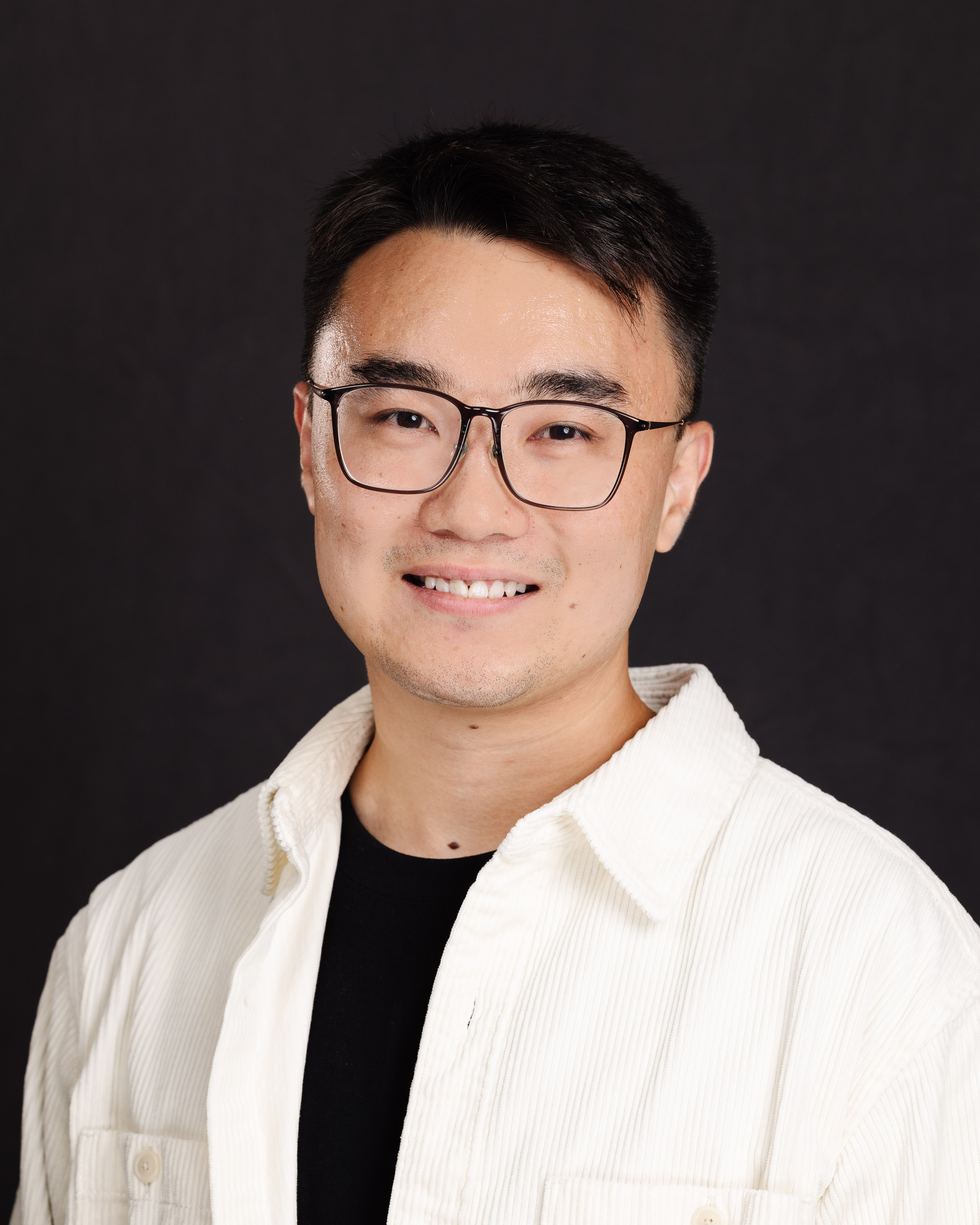
I am a Flatiron Research Fellow at the Center for Computational Mathematics, Flatiron Institute. I received my PhD in Applied Physics from Harvard University in January 2025, advised by Doeke Hekstra. I also hold a S.M. in Computational Science & Engineering from Harvard, and an undergraduate degree in Physics from Fudan University.
During my PhD, I was a Fellow at the Eric and Wendy Schmidt Center at the Broad Institute of MIT and Harvard, and interned at D.E. Shaw Research, where I worked on jointly fitting a family of QM/ML force field models to quantum mechanical and experimental data. I am also a core member of Reciprocal Space Station, an open-source consortium for structural biology software. I care deeply about contributing to the scientific community through both computational tools and shared infrastructure.
My research builds scalable, mathematically principled methods for biomolecular dynamics. I approach this by designing an interacting ecosystem of Data, Models, and Neural Priors, drawing heavily on the biophysical principles underlying experiments such as X-ray crystallography and cryo-EM, generative modeling, and statistical-physics-inspired sampling.
In this framework, Data represents the raw experimental observables (e.g., cryo-EM micrographs, X-ray scattering patterns); Models are the unified parameterizations of the molecule (e.g., atomic coordinates); and Neural Priors are the foundation models (e.g., AlphaFold) that capture the statistical rules of biology.
Data → Model. The core inverse problem, and where I spend most of my time. I develop differentiable forward models that faithfully map molecular structures to experimental observables, robust objective functions that remain well-behaved under noise and sparsity, and efficient samplers for high-dimensional, multimodal conformational landscapes.
Prior → Model. Steering pretrained foundation models with experimental likelihoods at inference time — without retraining — so they serve as principled priors for the inverse problem above.
Data/Model → Prior. Training biological foundation models on heterogeneous, context-rich data — integrating sequence, structure, surface chemistry, evolutionary signals, and experimental readouts — so the model learns to condition on the full biological context rather than any single modality alone. Besides, in area where physics-based prior is missing or less informative, data-driven prior can be useful.
Prior → Data. Closing the loop: using the neural prior’s uncertainty to guide experimental design and enable efficient, AI-centric data collection. This is the frontier I aim to develop alongside experimental collaborators.
news
| Apr 28, 2026 | Preprint out: MIMIC — a large collaboration with Polymathic AI. MIMIC is a multimodal biomolecular foundation model trained on diverse aligned data spanning sequences, structures, and exciting modalities like RNA transcriptome-wide chemical probing. Check out the blog post for an overview. |
|---|---|
| Apr 27, 2026 | Released the codebase for embedopt, including a tutorial for running it on real cryoEM map data. |
| Apr 01, 2026 | Our paper on ROCKET — using AlphaFold as a prior for experimental structure determination — is published in Nature Methods. |
| Feb 10, 2026 | Preprint out: embedopt, a new framework for robust inference-time steering of protein diffusion models via embedding optimization. |
| Jan 01, 2026 | Preprint out: GOTO, a robust differentiable sliced Wasserstein loss for image-based inverse problems, with applications to cryo-EM. |
selected publications
latest posts
| May 27, 2024 | Flow-Matching Objectives |
|---|---|
| May 13, 2024 | Training Neural ODE with three different loss types |
| Sep 12, 2023 | Implicit Reparameterization Gradients |